
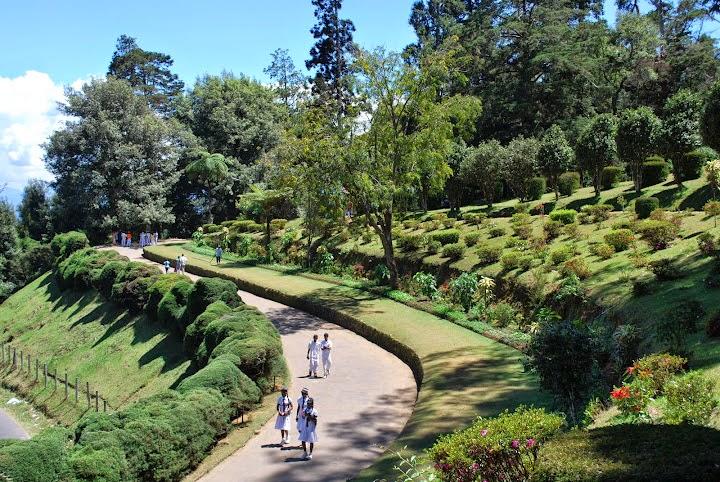
Hakgala Botanical Garden
Sri Lanka · Senthil Kumar · 27 Dec 2018
<p><strong>Hakgala Botanical Garden</strong> is one of the five botanical gardens in Sri Lanka. The other four are Peradeniya Botanical Garden, Henarathgoda Botanical Garden, Mirijjawila Botanical Garden and Seetawaka Botanical Garden. It is the second largest garden in Sri Lanka. <sup id="cite_ref-1" class="reference"></sup>The garden is contiguous to Hakgala Strict Nature Reserve.</p>
<h2><span id="Location_and_climate" class="mw-headline">Location and climate</span></h2>
<p>Hakgala Botanical Garden is situated on the Nuwara Eliya-Badulla main road, 16 km from Nuwara Eliya. The garden has a cool temperate climate because of altitude is 5,400 feet above the sea level. The mean annual temperature ranges between 16 °C to 30 °C during course of a year. From December to February it has a cold climate, while the warm climate persists from April to August.</p>
<h2><span id="History" class="mw-headline">History</span></h2>
<p>The garden was established in 1861, under George Henry Kendrick Thwaites as an experimental cultivation of Cinchona, a commercial crop thriving at the time. Once after the Tea replaced the Cinchona, it was turned into an experimental Tea cultivation. In 1884 it transformed to a garden. Since then many sub tropical and some temperate plants were planted in the gardens.</p>
<h2><span id="Folklore" class="mw-headline">Folklore</span></h2>
<p>In the folklores, it says Sri Lankan demon King Ravana after abducting Sita, kept her hidden in this area and area was offered to Sita as a pleasure garden, the place finds mention in the Ramayana as Ashok Vatika. <sup id="cite_ref-4" class="reference"></sup><sup id="cite_ref-5" class="reference"></sup>The area was named as “Sita Eliya” and “Sita Amman Temple” was built on the site.</p>
<h2><span id="Visitor_attraction" class="mw-headline">Visitor attraction</span></h2>
<p>There are over 10,000<sup id="cite_ref-abey_3-1" class="reference"></sup> species of flora planted here and during the Spring season in Nuwara Eliya thousands of visitors come to see the blooms here. Number of annual visitors are around 500,000.<sup id="cite_ref-abey_3-2" class="reference"></sup> The garden is famous for number of species of Orchids and Roses are planted there.</p>